• Menu
  • Skip to right header navigation
  • Skip to primary navigation
  • Skip to main content

Untold Stories Project

A home for the Untold Stories Project streaming network. Show information, cast bios, and blogs!

  • Twitch
  • YouTube
  • Twitter
  • Facebook
  • Discord
  • Instagram
  • Twitch
  • YouTube
  • Twitter
  • Facebook
  • Discord
  • Instagram
  • About USP
    • Welcome to USP
    • Current and Former Cast
  • Shows
    • Born of Rage
      • Characters
    • Carousel of Fear
      • Characters
    • City of Destiny: Emerald City Knights
    • Freedom League Dark
    • GemStars
      • Characters
    • Grave Circumstances
      • Characters
    • Heroes of Tomorrow
    • Guardians of Haven
      • Characters
    • Limited Series
    • The Order of the Penrose Triangle
    • Netherwar
      • Characters
    • Something… Something… Dragons
      • Characters
    • Something in the Dark
    • Story Forge
    • Tales of the Finest
      • Characters
    • Titan City Chronicles
      • The Lost and the Forgotten
        • Characters
      • Operation Torch
      • Bayside Murders
      • The Jordanow Mystery
    • Treasure of Vault 23
  • Blog
    • Game Theory
    • State of USP
    • Vignettes
    • NPC Spotlight
    • RPG Industry Updates
  • Merchandise
  • DriveThruRPG Affiliate Link
  • Patreon
  • About USP
    • Welcome to USP
    • Current and Former Cast
  • Shows
    • Born of Rage
      • Characters
    • Carousel of Fear
      • Characters
    • City of Destiny: Emerald City Knights
    • Freedom League Dark
    • GemStars
      • Characters
    • Grave Circumstances
      • Characters
    • Heroes of Tomorrow
    • Guardians of Haven
      • Characters
    • Limited Series
    • The Order of the Penrose Triangle
    • Netherwar
      • Characters
    • Something… Something… Dragons
      • Characters
    • Something in the Dark
    • Story Forge
    • Tales of the Finest
      • Characters
    • Titan City Chronicles
      • The Lost and the Forgotten
        • Characters
      • Operation Torch
      • Bayside Murders
      • The Jordanow Mystery
    • Treasure of Vault 23
  • Blog
    • Game Theory
    • State of USP
    • Vignettes
    • NPC Spotlight
    • RPG Industry Updates
  • Merchandise
  • DriveThruRPG Affiliate Link
  • Patreon

Alexander Thomas

Peace Offering

February 3, 2022 //  by Alexander Thomas

Peace Offering

Dr. Necros crept over the wall into the Church of Ethereal Wisdom a little after midnight. A horrid place, really; characterized by the greed and hate of religion gone astray. It would have been amusing, if not for the hellacious afterlife Dr. Necros had just spent the last seven years in. It had seemed like eons, but when he returned to life a few weeks ago, the newspapers had all claimed the seven year gap. However long it was, clearly it was a perversion of the Crossroads. A Hell masquerading as Heaven, no doubt conjured by the fools who count themselves among the flock of churches such as this. Dr. Necros had toiled in the pits of Mr. Chase’s dungeon nonstop. A torment that had provided benefits in exchange for his suffering.

His magic had grown more powerful, and he could apply it with greater precision. Even now he was invisible to the living eyes of the patrolling guards with their white polos and AR-15s. Dr. Necros strode across the wet grass between the cross-shaped church and the Reverend’s mansion. This new power brought perception with it. Perception that was driving his actions in Ferroburg.

She had been a chorus in his mind. Four voices singing the siren song of the end times. This Una was a fractious deity, grappling with power beyond her control and threatening the stability of the omniverse. And it was all Derrick’s fault.

Derrick, who had been a constant irritation in Necros’ life, had failed to use the power of the Vault to contain Una when he had the chance. He was the one who blended Seven and Una together in the first place and it was his comrades that added this former apprentice of Eldritch and Malador to the mix. Now Dr. Necros had no choice, but to clean up the mess left behind by these so-called heroes.

Dr. Necros phased through the northern wall of the church, emerging through the crucified body of Jesus like an Unholy Spirit. The worship space was as gaudy as imagined. The fixtures around the room were fitted with gold and silver. Avant-garde chandeliers made of platinum-encrusted glass descended from the ceiling every thirty yards or so. Dr. Necros stood on the altar which, according to the plaque on the wall, was carved from a single block of limestone quarried in Jerusalem. A stage filled with rock’n’roll instruments was caddy-corner to the altar. An audio/light control booth poked up across the sea of pews.

The air was stifling with old incense and self-righteousness. Dr. Necros shivered from the hypocrisy of it all. Hopefully, the specter was nearby. Almost on cue, the scared whimpering of a boy floated out from behind the grand piano. Levi Meyer. A young man who died tragically in the church earlier that year. He was set to be the sacrifice of time. Just one more injustice in a lifetime of sorrow, but Dr. Necros didn’t have the luxury of choice.

Shadows deepened as the temperature began to drop. A mist settled along the floor of the sanctuary and after a moment, Levi began to manifest. His translucent blue face was that of a child on his way to becoming a man. His ears and nose were too big for his head, but there was a kind sorrow in his ethereal eyes. He wore a white polo with the Church of Ethereal Wisdom’s coat of arms on the breast: two white sheep between an erect silver cross. He sobbed and it echoed through the church.

Dr. Necros exhaled a deep breath and stepped into the light. “Levi, can you hear me?”

Levi jumped in place, quickly wiped his eyes, and glanced around.

Dr. Necros chuckled to himself. Newer ghosts weren’t yet used to interacting with the living. “It’s alright, my boy. My name is Dr. Schultz, and I’m here to help you.”

“You can see me?” Levi squinted in Dr. Necros’ direction and floated forward a few paces.

“I can.” Dr. Necros raised his hands. “I am an expert on your…condition.”

“My condition?” Levi’s face twisted in on itself. He settled within arm’s reach of Dr. Necros.

“Yes, there’s no easy way to say this, but you are deceased.” Dr. Necros paused, waiting to see how Levi took the news.

A single, mercury tear slid down Levi’s cheek. He trembled and an almost silent yelp crossed his lips. “I…I remember. The congregation. Reverend Rathborn was…he was doing something to me. He had a tool in his hand. A tool like a spike.” Levi shuddered and spoke faster. “A spike and…and a hammer. On my head. And they were all watching. Watching and clapping and screaming and.” The last words faded into a whisper. “Oh my God.”

“He had nothing to do with this, my boy.” Dr. Necros reached out and placed his hands on the ghost’s shoulders.

The contact seemed to shock Levi back to his senses. Levi met Dr. Necros’ gaze. Power and hope flowed out of his eyes. “Is Tanner okay?”

Something about this boy reminded him of Nick and Derrick. Another hopeless romantic taken before his time. Dr. Necros grinned in spite of himself. “I have no idea who Tanner is, but—”

Levi sprang away from Dr. Necros like he’d been given a shock. The boy was running and Dr. Necros didn’t have time for this. There was a crash as the lid of the piano slammed in Levi’s wake. Dr. Necros clapped his hands together. Magic surged through his body like ice, slowing his heart, and tenses his muscles. His palms filled with sickly green arcane energy.

Dr. Necros closed his eyes and focused on the growing power in his grasp. The gnawing pull of the void, working through him, as a living conduit of the Soul-Vault. Oblivion filled his mind’s eye. Cold, unfeeling emptiness stretched out through his psyche as his heart stopped.

Everything beyond the spell was muffled as if Dr. Necros were buried alive. He felt the magic connect with Levi’s form as an electrical current through his organs. It stunned him for a moment, but the energy operated on its own at this point. A few moments passed and Dr. Necros’ eyes fluttered open. Levi’s voice was in his head, screaming for Tanner, and the boy’s innocent sorrow was heavy in the chest.

Dr. Necros fell to his knees. This was the third spirit he had captured in himself. The power was proving to be too much, but there wasn’t time for anything else. Una had to be stopped, even if it ended his new life prematurely. He put both hands on the ground and dry-heaved.

“Well, what do we have here?” A resonant baritone voice echoed through the room. The voice of Reverend Robert Rathborn.

“You don’t recognize me? I’m the Holy Spirit.” Dr. Necros staggered to his feet. Rathborn was standing with four of his guards, their weapons trained on Dr. Necros. He had severe, angular features, a sharp, salt and pepper goatee and he was dressed in a sweater vest and khakis. His hands were tucked firmly in his pockets and he stood like he had the whole cross shoved up his ass.

“Oh you are a ghost, Dr. Necros.” Rathborn removed his hands and crossed his arms. “I just don’t know why you are haunting my church.”

“Figured I should probably at least meet the family my Nick is marrying into, or hadn’t you heard?” Dr. Necros choked the last of Levi down and began focusing on another spell. Rathborn was going to be the perfect peace offering for Derrick and the Freedom League Dark.

Category: Vignettes

Step 4a for Writing Super Hero Adventures: Combat Encounters!

January 20, 2022 //  by Alexander Thomas

Step 4a for Writing Super Hero Adventures: Combat Encounters!

Hello heroes! Welcome back to the series I’ve been working on with general advice for Gamemasters looking to design their own super hero adventures. So far we’ve discussed brainstorming, research, villains, and outlines, what I consider the pre-adventure building blocks. These are the things you have to have in place to write a solid story. A story which consists of what I’m going to be talking about today: encounters!

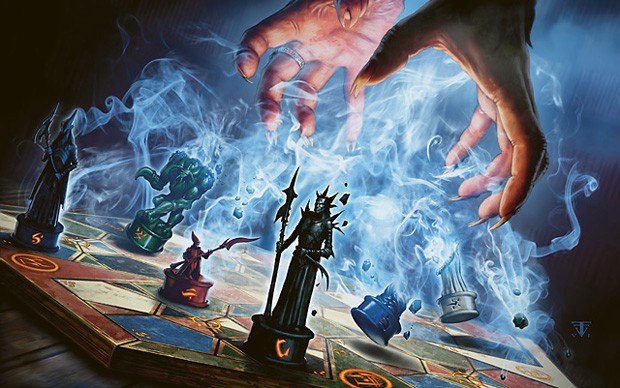
As you may recall in the outline section, I tend to break my games down into a few types of encounters: Combat/Conflict, Challenge/Hazard, Roleplaying, and Investigation. Over the next few posts, I will be going in-depth into these types of encounters and offering you tips and tricks for writing your own. I feel each warrants its own post to make sure we can cover everything I want to for each type.

Today we’re jumping straight into the deep end with combat encounters. Conflict is often the meat and potatoes of not only super hero stories, but tabletop RPGs in general. Players design their characters around the neat ways in which they can stop evildoers. People love punching villains in the face and driving forth their minions with awesome abilities. That being said, every scene in your game should drive the story forward in some way. Combat is more exciting when it has some bearing on the plot and I’ve got more than a few ideas for how to write amazing fight scenes.

Goals

This might be tired advice at this point, but every participant in a battle is there for some reason and they want to win. Something has brought them to this specific fight and they are looking to accomplish their goal. As Gamemaster, it’s up to you to figure out what that driving force is for each participant in the battle and tailor their tactics around that goal. It isn’t exciting for heroes to get into a fight just because. Sure, defeating all of the heroes is a way for the villain to get what they want, but it is rarely the most efficient. I find it helpful for each combat to write down the main villain’s objective and what they’re willing to sacrifice to obtain it. I also write down what the minions are willing to sacrifice for their boss. Mercenaries are generally less likely to fight to the last man than an army of cultists. These goals don’t have to be complicated, but even a simple one will elevate the drama.

I particularly like setting goals that the players can catch on to, because it modifies their tactics and encourages them not to root in place and punch bad guys until everyone is unconscious. If a villain wants to grab a thing and escape, show the players that thing so they can start to play keep away. That is unless your villain is sly and their goal is to distract the heroes while my invisible minion grabs the thing and escapes. Imagine three rounds of combat passing before the villain inexplicably leaves. The heroes will immediately begin investigating the area to see what they missed.

I tend to think of goals as item-based, time-based, location-based, or distraction-based. That is the villain wants to take something, they need to be in a certain place at or for a certain time, they need to occupy a location, or they need to keep the players’ attention off of something else. Each of these goals can apply to any level of villain from lowly henchman up to mastermind, and can be mixed and matched within the same combat for different groups of characters. Tie that goal to the villain’s motivation and you’ll create fights that matter in the grand scheme of the story.

Location, Location, Location

More than most types of encounters, location is vital to combat. Every scene benefits from an interesting setting, but in combat the location should almost be a character in its own right. This is especially true for super hero games where PCs can traverse miles of terrain in a single move action. No one remembers a combat encounter that occurs in a 60×60 square box, but your players will always remember the fight they had in the erupting caldera of an active volcano.

Be on the lookout for opportunities to add a twist to your environments. These can be natural hazards or traps laid by the villain in advance. If the heroes are facing an ice villain, there’s a good chance that character has created slippery floors, walled off areas with glaciers, and generally made the terrain inhospitable to others. The heroes suddenly find themselves in need of cold weather gear, snow shoes, and they might have to resort to alternate routes to get where they want. Routes that no doubt lead to chokepoints the villain has layered extra defenses over.

Not everything has to be a benefit to the villains however. Clever heroes should be able to make use of terrain benefits just as much as their cunning adversaries. These location-specific features can be great moments to highlight and reward characters with unique skill sets. The inventor just so happens to bring the assembly line back online and now robot arms grab villains each round or the magic character can translate and modify the ancient runes on the ruin wall to create a circle of protection for their allies.

I have found it helpful in some of my more iconic locations to actually give the area a pseudo-character sheet and a turn in initiative to make sure the environment is given its due in combat.

Variety

One of the best ways to keep players on their toes is to add a wide variety of combatants with different capabilities. Support your big evil bad guy with all kinds of minions, not just mooks with guns. Minions with strange movement powers like flight or teleportation. Henchmen with effects that disorient or poison the heroes. If the main villain is a big bruiser type, give them a lieutenant that focuses on mind control or illusions. It will go a long way to making the heroes consider their tactics if their opponents occupy different zones of the battlefield and have different strengths to bring to bear. The heroes will have to divide their attention and resources, giving you the chance to design moments for specific characters to shine in each combat. This should be the case in every level of hero game, even street level heroes can face opponents with melee weapons, automatics, shotguns, and rocket launchers.

Variety also gives you the chance to show that the villain or group in question is dynamic. If they have a wide selection of responses to given threats they seem competent and more threatening than just a horde of faceless goons all with the same attack powers. A lot of GMs bring this attention to groups of equal villains, but it should apply to villains with lesser minions as well.

Fail Forward

One final piece of advice that bears mentioning for super hero combat is to remember that heroes are rarely killed by supervillains, even when they lose. In fact, most super hero stories start with the villain beating the hero quite handedly and leaving their body and ego bruised. If a situation arises where the bad guys start winning, don’t initiate a TPK. Have the villains capture the heroes so they can put them in an elaborate death trap and walk away. Make the villain stop for a moment to gloat and monologue about how awesome their evil plan is as the heroes catch their breath. Even in cases where the whole party is knocked unconscious, have them wake up as prisoners and give them the chance to escape. The villains want to win but they understand the value of keeping the heroes alive, and most of them like to get their brag on.

I never let the dice decide when a character dies. Death in super hero stories is supposed to be dramatic and world-shaking. They should not be caused by poor poor die rolls on the part of the players. If a character does fall because of a tough combat scenario, make sure that death is suitably epic. I like to give a player character that is about to die one action before they shuffle off. They can’t use this action to prevent their death, but they can use it to do just about anything else. It lets the player go out in a way that is satisfactory to them. They can get one final attack on the villain, send their allies to safety, and give a badass inspirational line. Anything to give that death more weight.

That’s just a few ideas to get you started building more exciting combat encounters. If you pair this with the article I did about How I Balance My M&M Encounters you’ll have everything you need to begin experimenting in Mutants & Masterminds. The easiest way to get better at designing combat encounters is practice. So I encourage you to take these tips and start playing with your players.

Thank you again for reading and as always, may your hits be crits!

Category: Game Theory

The Multiverse and RPGs #1: Into the PC-Verse

January 13, 2022 //  by Alexander Thomas

The Multiverse and RPGs #1: Into the PC-Verse

Hello heroes! I wanted to start the new year off with a topic that has not only become near and dear to my heart, but has taken superhero media by storm. The multiverse! This isn’t a new concept in superhero stories, but it does seem to be nestling itself within the zeitgeist at the moment. It seems like there are infinite universes everywhere you look; from the Marvel Cinematic Universe to Legend of Zelda, to Flashpoint, to the Jimmy/Timmy Power Hour. It’s not hard to see why this idea appeals to so many. Writers can showcase new versions of iconic characters. They can introduce scenarios that change the established status quo without consequence to long-standing canon. Fans can finally get the answer to the question, what if Spider-Man was a cartoon pig?

But what does this all mean for tabletop roleplaying games? Is it possible to bring elements of the multiverse into your games? The answer, as with most concepts, is absolutely. The multiverse is a tool you can use to keep your players on their toes, to inject new drama into your stories, and to experiment with fun concept adventures. I’ll be breaking down several multiversal threads that can improve your game over the next few essays.

I first want to talk about a concept which seems to apply to Spider-Man a lot (see Spider-Man: Shattered Dimensions and Into the Spider-Verse.) Essentially, creators tap into the wellspring of nostalgia by having a character team up with themselves. This idea of every character being a version of the same character has always fascinated me from a RPG perspective. I remember hearing about a game at Origins Game Fair where every PC was a character portrayed by Harrison Ford (Han Solo, Indiana Jones, Rick Deckard, Jack Ryan, and a few others) and they were assembled to stop a bunch of Christopher Lee characters. It blew my mind, and got me thinking about what sort of effort would need to go into making something like that happen outside of a con experience. I’ve worked up some advice that I will list below:

Session Zero/Player Engagement

Much like anything else in Gamemastering, preparation is key. First you need to check with your players and see if the idea of playing variants is even interesting to them. If they’re interested, great, we can move on to the planning side of things. You’re going to want to schedule a large chunk of your session zero to discuss the hero everyone is based on. Treat this base character like a group PC. Everyone should have some say in regard to their personality, powers, origin, costume, anything that makes a superhero work. You also want to make sure that this hero has a wide enough archetype that players can take their re-imaginings in a lot of different directions. This shouldn’t be a gimmick character, unless your group is planning on tweaking the gimmick to create their variants—I’m picturing Condiment King, Seasoning King, Deep-Frying King, and Potato King for some reason. I would also have each player pitch a supervillain that this hero goes up against on a regular basis, to give you as the Gamemaster characters that you can make variants of.

In my notes I would say Player A came up with Villain A and I’m going to make a variant of them from Player C’s universe. You won’t have to work as hard if this is a licensed character like Loki or Spider-Man, but it’s vital that you make sure everyone has a firm grasp of the foundational aspects of that character. Nailing this down collectively, ensures that your players can make intentional choices with their changes to the character in ways that are dynamic and true to who that character is. This helps you avoid players coming up with characters that are only connected in the tiniest of ways.

Points of Variation

Good variants live and die based on their point of difference from the original character. Encourage your players to review the foundations of the base character and work on their concept from one slight difference. Power origin is a great place to find a thematically different version of a character. If the base character is a mutant, consider a variant that gains their powers through magic or technology. Move the character into different time periods—medieval, the far future, sword and sandal, or noir are great ideas. Tell the players to consider a genre shift. If the base character is a four-color comic hero, what would they look like as a cartoon character or as a survivor of the post-apocalypse? How do their powers function differently than the base character? Are they the same person as the base character? Are there any NPCs that could be a fun switch ala Spider-Gwen? What animal would be the funniest when combined with their power set? These points of variation are excellent conversation starters that will get your players’ minds churning with possibility.

Specialization

One thing to consider, both from a character and game design perspective, is that each of these characters should have a unique ability they bring to the team up. Even though they are ostensibly the same person, you still want to be able to create scenes that individual players can shine in. This is also a pitfall to avoid in instances where all of the characters have the same power set—like in a Green Lantern campaign for instance. Encourage your players to think of something that only their variant can do and write scenes that are made easier by those abilities.

Sometimes this will be obvious, like giving magical knowledge to the variant with a mystic background and technology to the super science variant, but sometimes it’s more subtle. Perhaps one of the variants is an older, more mature version of the character that has some leadership abilities. Give that character a scene where they get to rally their comrades and help everyone play to their strengths. In terms of character design, you can help your heroes by having them each select a combat role in the group and then build their variant in that direction.

Say the base character is a genius in a battlesuit called Maceria. The base form is a blaster who focuses on ranged attacks. One of the variants can be Maceria-Noir, a hulking monstrosity of steel and steam that tanks damage like none of the others. Then there is Dr. Maceria, an experienced artificer from a fantasy realm who specializes in healing magic. Finally, there’s MAXceria, a brawler from a future where fighting robots are king and he’s outfitted his fists with razor sharp claws and karate chop action.

In conclusion, it can be very exciting for players to delve into variants, either for one session or for a whole story arc. With a little communication and good planning on your part it doesn’t even have to be that difficult to pull off. Keep checking here at USP for more multiverse content coming soon. Thank you for reading and as always may all your hits be crits.

Category: Game Theory

USP End of Year Check In 2021

December 23, 2021 //  by Alexander Thomas

USP End of Year Check In 2021

Holy cow everyone, I can’t believe it’s already the end of 2021. This year has been a heck of a ride here at USP, and I just wanted to take some time as we go into 2022 to talk about some of our highlights from the past year and to let you all know a little bit about our exciting plans in the new year.

USP is almost two years old at this point and those two years have been some of the most uncertain times in recent memory. It has been energizing building this community, providing a welcome respite from everything going on. I have loved our games, our conversations, and I appreciate all of you who have stopped by to say hello in stream, dropped a comment on one of our YouTube videos, or just read our blog posts here on the site. Thank you everyone from the bottom of our hearts, we couldn’t do all this without you.

So, here’s a few things we accomplished that I’m particularly proud of in 2021:

  • Founding this website and blog. It has been wonderful having this space to function as a launch pad for all of our content. We’ve featured works from talented writers and artists on the blog, and we’ve kept a fairly consistent upload schedule. Love to see it!
  • Origins 2021. This was our first convention appearance in person, with Andy, Aaron, and myself all running games where we got to interact with people directly. It was amazing getting the chance to introduce new folks to our platform and playtest something that I’ll talk about a little later in the wild. I’m immensely proud of everyone who put in the work to represent us in the physical world, and can’t wait to see what we can do at Origins 2022 and other conventions next year.
  • Founding the Earth-Prime Tabletop Universe. This year saw us focusing on Mutants & Masterminds, but more specifically with Green Ronin’s flagship setting of Earth-Prime. I started us in February with Netherwar and we are on track to play through at least February or March of 2022 with this epic story. On top of Netherwar, we added City of Destiny, our playthrough of the Emerald City Knights campaign, but the kicker is, both games exist in the same world at the same time. We’ve even had a massive crossover episode with 10 PCs at once, GMed masterfully by Aaron. Crystal Fraiser and Steve Kenson even came on as guest stars in a couple of episodes, and we became an affiliate with Green Ronin. And I can assure you the EPTU is only beginning.
  • Highlighting Other RPGs. Even with our M&M showcase, we found time to shine a light on a number of other lesser known RPGs this year. Fallout Wasteland Warfare, Werewolf the Apocalypse, Monster of the Week, and the Blue Rose Adventurer’s Guide all got series on the channel. We had one shots as well for Call of Cthulhu, D&D, 7th Sea, Alien: Colonial Marines, Things From the Flood, and Crash Pandas.
  • Becoming an LLC. We officially became an LLC in the state of Ohio, making us kind of legitimate. I just think that’s neat!

It’s been an awesome year, but next year is going to be even better. Just to announce a couple of exciting things we have planned in 2022:

  • Publishing TTRPG Content. Starting with our first adventure module: The Lost Library for Mutants & Masterminds, we are going to be creating material for you to use at your home tables. We’re looking into adventures, NPCs, locations, option rules, all sorts of things for all sorts of systems. Keep an eye here on the site as that information becomes available.
  • Monthly One-Shots. We’re going to be doing monthly one-shots on top of our November/December Holiday series so we can show-off even more systems throughout the year. We’ll be starting with finishing some “one-shots” I ran earlier in 2021, since I have the tendency to write more than I need. Surprise. But starting in March we’ll be doing brand new content, including a Lancer stream run by Calvin! If you have suggestions for systems we should look into, please post them in the comments below, or let us know in Twitch chat!
  • EPTU Expanded. Netherwar Season 1 is coming to an end early in 2022, but that crew will be taking on another EPTU series after Netherwar comes to a pause. I won’t spoil exactly what corner of Earth-Prime we’re going to, but just know it’s going to be pretty Stellar.

That’s just a few of the exciting updates we have to look forward to in 2022. As always, thank you so much for your support as our community has grown and found its footing. All of us here at USP greatly appreciate it. Please have a Happy New Year and play something fun for us!

Category: State of USP

Messing Up as a GM (Or “How I Learned to Stop Worrying and Love the Random”)

December 9, 2021 //  by Alexander Thomas

Messing Up As a GM

There is an incredible amount of pressure placed on the Gamemaster in a tabletop roleplaying game group. The GM wears a lot of hats: from storyteller to referee to improviser and many others. When anyone is juggling that many plates, eventually they will drop one, splattering the folks watching and making a big old mess. GMs are human, and humans are imperfect creatures. That doesn’t mean the campaign or even the session is ruined, it just means that you have to pick yourself up and get back to it. No one is the perfect GM all the time, it doesn’t matter how much experience or how much trust your players have in you. I actually messed up in our Netherwar series recently, and I figured it would be helpful to GMs out there to hear what happened and what steps I took to address the issue that I caused.

Let me start by briefly summarizing what happened and explaining how I really stepped in it this time. At the end of Episode 71: Drop the Jupiter, I left my heroes on a cliffhanger. This isn’t unusual for my GM style, and I was heading to New Orleans for my honeymoon the following week, so I really wanted to stick them with something juicy. I had the episode end with Andy’s character Resonant learning that her mother was in trouble in her home dimension of Leifandi and with Jonesy’s character Mortis learning that his fiancé Nick was seemingly taken by force from their home. As a storyteller, I thought this would create an interesting dynamic in the group where they would have to tackle the emotional stakes of who they would help first or force them to split up to try and do both at the same time. I thought that would be a spicy story with lots of potential drama and roleplaying, and that would have been fine if I were writing a book.

Unfortunately, what works when you’re writing a book, doesn’t always come out that way in a group storytelling situation. So I stuck this grenade in their laps and went away for my honeymoon, none the wiser.

When I got back, I settled in to plan out the next stages of the story, thinking about the various ways the heroes might attempt to solve the problem I’d placed before them. I planned possible NPCs that the heroes might enlist to pad out their numbers in case they wanted to split up. I also wrote out some consequences for following either of the leads in different orders. Not with the intention of harming one of the beloved NPCs, but ways that the investigations would be more difficult for whomever was chosen second. Unfortunately, this whole session was going to be tougher than I thought, and was not my best work.

Thirty minutes before the session began, as we were doing our audio/video checks, one of the players said to me that they were frustrated as a player, not as a character. That was not my intention with the split. It is never my intention to frustrate the players. At the end of the day gaming is meant to be a fun escape and chance to tell stories with your friends. What they said really struck me. The player elaborated, stating that they were upset that their character wouldn’t be able to see all of the story beats if they decided to split up. The party would be separated and wouldn’t get to see the insight into either Resonant or Mortis’ backstory, and they believed that what was at stake was forcing them to have to split up.

That all made sense to me, so at that moment I started devising a way that everyone could be in two places at once. We’re playing a magic super hero game, anything can be possible. This was an important decision, because it showcases one of the things I always stress to GMs. Don’t fall so in love with your story that you deprive your players of agency. I could have told the player, I’m sorry, but this is what I have planned, suck it up. But that wouldn’t have resolved the issue, and could have affected that player’s trust in me. So, I came up with a way to progress the story so everyone could see every plot point, but I added a consequence to this solution.

The heroes uncovered a spell that could duplicate them, allowing two parties of PCs to head after both leads at the same time. However one of those groups was Freaky Friday-ed. They had swapped bodies so when we get to that group, they will be playing with one another’s powers, which I think is going to be a blast.

Improvising and adapting to the player’s mood is so crucial as a GM. At the end of the day, if your players are having fun you are doing your job as a GM. I took a situation that was frustrating and I turned it into an opportunity for a fun story beat. The way to do this is by saying “Yes, and” or “No, but” more often than you say no. Don’t be afraid of the ideas that come out of the void and trust in your creativity. Some of my favorite moments in gaming have been off the cuff sparks of inspiration. Improvisation is actually how I got my start working in the TTRPG industry as a writer, but that’s a story for another time.

Unfortunately, the disastrous cliffhanger wasn’t the only issue I had while running the game that night. As I said, it was not my best work as a GM. When we eventually went to Leifandi, I felt personally that I let Andy down. He wrote an amazing blog post about Leifandi which you can find here. A blog post which I should have read closer when I was doing my preparation for the adventure that week. I stress all the time that GMs should include their players in the world-building for the campaign. It helps build player investment in the story and the world, but that only works if you take what they give you and learn it. Ask questions, look for clarification, and do it before you get to the table.

In that session, I leaned on Andy, asking him to describe things, partially because I wanted to give him a chance to show off this shiny thing he made, but also because I didn’t know the material as well as I should. I also got the names incorrect on a few major NPCs which added to this feeling of indifference on my part. I felt after the session that Andy was offended, and rightly so. This leads to the next lesson in cleaning up GM messes, communication and accountability.

In the days after that session, I reached out to Andy so we could have a one on one video chat, so I could A.) Apologize and B.) Get clarification of details so I could fulfil my responsibilities as GM and write accurate flavor text/plotlines. There’s a lot of ego tied up in being a Gamemaster, and you can use that ego to go on a power trip with your friends, or you can admit when you’re wrong and take steps to correct it. Andy was very generous with me, giving me information that I needed and brainstorming the trajectory of the Leifandi story arc that we’re still playing through.

Your players want to have a good time, just as much as you, and it is never you against them as a GM. That little bit of communication and owning the mistake prevented the situation from spiraling further, and I think in the subsequent Leifandi adventures, we’ve hit our stride again as a group. More importantly, I think I have maintained the trust of my players, which is paramount when running an ongoing campaign. I hope my example can help you, if you’re going through a tough time as a GM. Thank you for reading and may your hits always be crits.

Category: Game Theory

The Forge

October 14, 2021 //  by Alexander Thomas

The Forge

Ethan stretched his neck as he stood from the three-legged stool. The small of his back ached, the first sign that the adrenaline of the day was beginning to fade. To be fair, it had been an eventful one; a day full of shock and change. He set his brush onto the tray, careful to keep the bristles out of shimmering gold paint. Ethan had been in the forge and the paint shop for the past few hours, working on his disguise? Disguise didn’t feel like the right word.

Uniform? No, too formal. Most of the folks in Freedom City, at least the people on the news, called the clothes superheroes wore costumes, but the mass of shining metal on the rack was more like armor. “Superhero. I can’t believe this is happening.” Ethan picked up the welding mask as he spoke to himself.

Tommy’s excitement had kept the buzz going in Ethan, but being alone with his thoughts in the silent shop was causing him to sober up. How did this even happen? One moment, he was on the bus and the next he was moving things with his mind, like some kind of Jedi. No not like a Jedi, he could only move metal.

Ethan groaned and put the mask down. He grabbed his forest green duffle bag and started loading it with armor pieces. His thoughts drifted away to the conversation with his father that morning. Somehow that was only a few hours ago. His dad wouldn’t even let him switch his major, how would he react if he found out about the whole Crucible thing? Tommy said that he should have Ryleigh help him with his alter ego, but she’d just run and tell his dad. No. His parents and/or their spouses couldn’t find out yet.

There was also the matter of the others: Marshall, Glados, Ice Princess, possibly even the scary robot octopus. Were they like him? People caught up in whatever gave him his powers, or were they something else? Wait, did the octopus get super powers today too? How did that happen? Was there a sushi restaurant down on Yellow Brick Row with a busted aquarium? It didn’t matter, they all worked together to stop those rampaging lunatics, and that was… Well it was something.

Ethan didn’t know how to get a hold of any of them, but Tommy would probably have some ideas. Tommy was probably going to have a lot of ideas in general from now on. He lugged the heavy duffle up by the straps and looked around the shop one more time. His eyes rested for a moment on Raina’s most recent piece: a framed illustration of a supervillain. She looked unsettling with patchwork skin and a spooky wooden mask. Marionette was written on the frame. He wished he knew the inspiration for Raina’s style. He wished he knew a lot of things about Raina.

Ethan sighed and flicked the light switch off in the shop. He had to get back to Tommy and figure out their next move.

Category: Blog, Vignettes

Sophie’s Choice

October 7, 2021 //  by Alexander Thomas

Sophie’s Choice

This wasn’t how it was supposed to feel.

Sophie pushed through the door of her Southside apartment and made her way to the liquor cabinet next to the fridge. She poured a double shot of whiskey with trembling hands and downed it. The warmth passed into her chest, mixing with the adrenaline so that she barely felt the drink. There was only one answer for that problem. Pouring another. She took her second double and dropped onto the red cushions of her loveseat.

The neon lights of a Boardwalk casino bathed the small living room in flashing red and gold. Usually she was used to it, but tonight those lights were vibrant. Everything was. From the ticking of the analog clock above the door to the clinking of ice in her shaking glass. She could even feel the nicotine stains that filled the building’s air on her skin. Fourteen years she had waited. And now it was finished. Adrian Eldritch was dead.

The man who had taken her life, twice, was no more. And yet, that cavernous hole in heart; the empty pit that threatened to swallow her every day was still there. Why was that? Sophie had done what she set out to do. She had fulfilled the vow she made to her sixteen year old self. How was that already fourteen years ago?

For some reason, she could only think of Fletch, the beautiful idiot she’d used in her plan. She wondered what his face had looked like behind the vault door when she laid her cards on the table. He had been sweet, if lacking a little finesse. Sophie couldn’t think about that. She knew this was going to happen when she selected him as her way into the Freedom League Dark.

If anyone was going to find where Adrian had hidden himself it was them. She didn’t want to hurt them, they were relatively innocent in all this. Fletch wasn’t even a magic-user for God’s sake. But she needed to get to Adrian.

Her thoughts drifted back through the years. An exercise she had perfected after clawing back from the dark place Adrian had placed her mind. He robbed her of her identity, tried to place her in a “perfect” world, while denying her who she was meant to be. Adrian decided that on his own, and he defined perfect. Giving her up to a suburban family in Emerald City, thinking that was the end of it. But the mind of a mage isn’t so easily broken. Especially the mind of a Master Mage.

That was Sophie’s destiny, not to grow up to be a doctor or lawyer or whatever passed for the American Dream now. She was supposed to replace Adrian, as Earth’s greatest sorceress. The parents Adrian gave her were good people, but they were normal people who wanted normal things. That was like Hell.

Sophie took another sip from the whiskey and walked over to the window. Across the way, she could make out Freedom City’s skyline, with Freedom Hall shining bright in the night sky. Every day she was bombarded with the news of superheroes battling supervillains across the world. For a while she couldn’t remember who she was, but each news report dug into her subconscious like an archeologist searching for hidden wonders. Eventually, pieces of herself began to surface.

It was a rush at first, feeling the taste of magic again. Keeping her abilities secret, in case Adrian had instructed her parents to tell him if she began to manifest again. That rush gave way to cold anger, and the pit in her heart. It was worse when Adrian “died” and Seven took his place.

Sophie snarled in disgust when she thought of Seven’s name. She wasn’t even strong enough to fight Una with four other heroes helping her. How did she get to stay Adrian’s apprentice? She was a decent enough mage, but Master Mage material? Not with a hundred years of training. Sophie was relieved when she died, not happy, but grateful that the Master Mage energy would once more be up for the taking. She was twenty then, and for the last ten years she wondered why the energy never came.

It wasn’t because she wasn’t strong enough. She practiced her magic every day, even created her own Cloak of Flight to replace the one Adrian took from her. Una must have done something to prevent a new Master Mage from being named. That was the only logical explanation. Or it went back to Adrian. Now that he was gone, maybe, just maybe the mantle would finally pass to her.

Sophie downed the rest of her drink and looked down at the glass. The triangular pattern in the crystal looked like arrowheads. Fletch again. Her body shivered as a tear slid down her cheek. She barely heard the glass slam into the wall before she turned to enter her bedroom, hoping the pit wouldn’t feel so empty when she awoke.

Category: Blog, Vignettes

How I Balance My M&M Encounters

September 23, 2021 //  by Alexander Thomas

How I Balance My M&M Encounters

Hello heroes! This is a brief, but relevant detour in my Writing Super Hero Adventures (Step 1, Step 2, Step 3) series that we’ve been presenting on the blog. I’ve tried to make that series system agnostic, because I know not all of you are playing Mutants & Masterminds. There are plenty of great super hero RPGs on the market. I’ve enjoyed Icons, Prowlers and Paragons, Supers!, Rotted Capes, and Savage Worlds Super Powers expansion, but personally Mutants & Masterminds has always been my favorite. This probably isn’t a surprise to anyone, considering my position at Green Ronin Publishing as well as all of the M&M content we stream live here at USP (Shoutout to Netherwar on Mondays and our upcoming Tuesday night City of Destiny: Emerald City Knights playthrough.)

Mutants & Masterminds is just a system that keeps capturing my imagination. I love the narrative focus combined with the little bit of mechanical crunch that it offers, as well as how powerful it makes your superheroes feel. I prefer to capture that larger than life feeling in my games, similar to the DCAU or Avengers: Earth’s Mightiest Heroes. Stories where superheroes get to be well super! M&M offers that feeling through its combat system and through the amazing Hero Point mechanic.

That being said, someone recently asked me how I balance my encounters in Mutants & Masterminds. Which is a fair question, one that I feel like I have to answer, before I can move on to Step 4 of Writing Super Hero Adventures. M&M uses a Power Level system to set the limits of the PC characters. Power Level determines how high a character’s to-hit can be when compared to their Damage and how high certain Defenses can be when compared to one another: Dodge/Parry versus Toughness and Will versus Fortitude. These numbers can only add up together to equal Power Level x2. So if we use PL 10 as our baseline: to-hit +10 can add to Damage 10 to equal 20, to-hit +8 can add to Damage 12, so on and so forth. Comparing PC PL versus NPC PL is the main thing we want to look into when considering encounter balances.

I start by establishing what a medium difficulty encounter looks like. Combats that can go either in the PCs favor or against them depending on the roll of the dice and effective tactics in combat (using things like Maneuvers or clever Power Stunts.) I have the following chart that describes those baselines:

NPC PL compared to PC PL Amount of Enemies

  • PC PL -4 or Lower: 4 per party member
  • PC PL -2 or -3: 2 per party member
  • PC PL -1: Party size +1
  • PC PL equal to equal to party size
  • PC PL +1: Party size -1
  • PC PL +2 or +3: 1 per 2 party members
  • PC PL +4: 1 per 4 party members

This is the baseline I work with when designing 80% of my encounters, because ideally you want most of your encounters to be fair and winnable, especially in a super hero fight. I’ve just found in my hundreds of M&M games that these levels are a decent challenge for a group of heroes. Especially stacked up against the fact that the majority of combats in tabletop RPGs last around 3 rounds.

If I want to make an encounter especially difficult or especially easy I take these numbers and I multiply them by 1.5x or .75x (usually adding or subtracting 2 villains per tier.) Another thing to shout out, is that M&M has a Minion mechanic that affects my table above as well. Minions are villains who statistically still match up to Power Level limitations, but they have a couple of factors that make them easier to handle. Firstly, they can only suffer one degree of failure on a resistance check before they are eliminated from the fight. Secondly, heroes can attack minions as a routine check (attack modifier +10), so they don’t have the risk of rolling a 1 and missing. Finally, minions cannot critically hit non-minions. With those limitations in mind, I’m usually happy to double the amount of bad guys present per tier if they are all minions.

So this system is all well and good if all of the villains in a scene are the same Power Level, but what happens if you decide to mix and match? Say a Mastermind villain has a group (or groups) of minions with them, or the Legion of Doom happens to have a couple of interns at the fight that day? That requires a little more experimentation to balance correctly, and I don’t have a hard and fast formula for how I do that.

The closest thing I have to that is I’ll use the Equal to PC PL level as a solid middle and combine the categories that are above and below. So if the Mastermind is PC PL +2 or 3 I’ll give them cohorts who are PC PL -2 or 3 and move some numbers around. Assuming 4 PCs, instead of having 2 PC PL +2 or 3 villains, I’ll just have the one and I’ll only do 2 PC PL -2 or 3 cohorts (or 4 if they’re minions.) It’s all very fluid and experimental, which is fine in Mutants & Masterminds. One other time-saving piece of advice I’ll give you, while we’re talking about being fluid, is that you rarely need full character sheets for NPC villains.

You should of course build full sheets for your major adversaries, but lesser villains don’t need all that. You’re fine to get away with their Dodge/Parry (which I usually keep the same for my own sanity) Toughness, Fortitude, Will, their to-hit and Damage for 1 or 2 attacks, and any movement powers they have. I’ll also let you in on a little secret, I usually have a few templates I’ll use and just swap out offensive powers and movements. I’ll usually break it down like this:

  1. Villain has numbers all equal to their PL (so PL 6 has 6s for Dodge/Parry, Toughness, Fort/Will, to-hit, and Damage/Affliction)
  2. Villain has their numbers shifted by 2 in either direction (so PL 6 has 4 Dodge/Parry, 8 Toughness, 8 Fortitude, 4 Will, +4 to-hit, and 8 Damage/Affliction or 8 Dodge/Parry, 4 Toughness, 4 Fortitude, 8 Will, +8 to-hit, and 4 Damage/Affliction)
  3. Villain has their numbers shifted by 4 in either direction (so PL 6 has 2 Dodge/Parry, 10 Toughness, 10 Fortitude, 2 Will, +2 to-hit, and 10 Damage/Affliction or 10 Dodge/Parry, 2 Toughness, 2 Fortitude, 10 Will, +10 to-hit, and 2 Damage/Affliction)

I’ll usually move Fortitude and Will around in these 3 templates if they don’t make sense, but I bet looking at those templates, you can tell what kind of villains fit those numbers. It keeps your prep work simple and let’s you improvise opponents on the fly if the PCs go left when you thought they were going to go right.

It’s important to keep in mind, when designing your encounters, that M&M is meant to replicate super hero stories, so combat is rarely supposed to be incredibly dangerous. There will be times when you want to go all out and have the BBEG boss fights or throw a group of joke villains at your heroes, but the majority of the time your players will just be content throwing down with villains and getting to show off their cool characters and powers.

There are plenty of things you can do as a Mutants & Masterminds GM to control the ebb and flow of combat, outside of the numbers on the villain’s character sheet. You can invoke Complications and force the heroes to deal with those situations on top of the fight. You can create interesting and dynamic settings for your combats which force your heroes to be creative in getting around and using the environment to their advantage. That’s all way more important than how high the bad guy’s to-hit bonus is. It’s also what we’ll be covering in my next blog post when we finally dive into Step 4 of Writing Super Hero Adventures: Designing Dynamic Encounters. For now, that should be a good baseline for you to start balancing and experimenting with your M&M encounters! Until next time, may all your hits be crits!

Category: Blog, Game Theory

Step 3 for Writing Super Hero Adventures: Outline

September 16, 2021 //  by Alexander Thomas

Step 3 for Writing Super Hero Adventures: Outline

Hello heroes! Welcome back to the next installment of my process for creating engaging and exciting superhero tabletop RPG adventures. In Episode 1 we talked about brainstorming, synopsis, research, and player characters and Episode 2 covered villains. Now we’re ready to get into the real meat of adventure design.

Today we’re talking about how to design a solid outline to function as the backbone of your scenario. I’m going to walk you through how I build my adventure skeleton, a skeleton which can be enough to run a full-on session without further development, but can also function as the jumping off point to create more in-depth adventures. I will continue to reference my Sinister Six example from the past two blogs.

Admittedly, there are two kinds of writers in the world, often called pantsers and plotters. Pantsers prefer to fly by the seat of their pants, working from nothing but their imagination and maybe a Post-It Note that says “Joker stuff this episode?” I am able to work in this format (and I have often had to due to procrastination) but I prefer to be a plotter. I find that taking the time to create a solid outline, leads to more enticing inciting incidents and better plot developments (things like plot twists and satisfying endings.) If you are a panster, I hope you’ll get something from my outline advice, but I admit you are a mercurial unicorn who walks your paths through wondrous places. As for the plotters, this is the perfect resource for you.

To begin, I look into Pre-Adventure Notes. This is where I will mark down who the main antagonist is, what their motivation is, and what they have done before the adventure to set themselves up for success. This is usually a paragraph or two of relevant information that the players will never see, but helps me begin imagining which scenes to build. Here is an example from a game I’m working on for Origins 2021:

Decades ago, long before the formation of the Justice League, the New God Metron brought a dying Billion Dollar Bates to Daxam. Bates was the sole mortal with the complete knowledge of the Anti-Life Equation and had spent the 50s and 60s being pursued by Darkseid’s agent DeSaad. This pursuit culminated in a battle beneath Bates’ mansion, with Bates and a cult known as the Sect facing off against DeSaad and an army of Parademons. DeSaad moved to capture Bates when Metron intervened.

Metron foresaw the damage Darkseid would do with the Anti-Life Equation and, in a rare moment of proactivity, grabbed Bates and took off through time and space for a world on the other side of the universe. Somewhere DeSaad would never think to search for a missing human: Daxam, 5,000 years earlier. Bates died shortly after arriving in Erkol. To Metron’s surprise, the Anti-Life Equation wasn’t so much in Bates’ head, as on it. His flesh fell away, revealing his skull upon which the equation was engraved. Metron buried the skull in the foundation of the in-construction royal palace, tuned his Mobius Chair to scramble his memories of the event, and returned to his original time.

For five-thousand years, the skull remained undisturbed as Daxam grew around it. Wars were waged, regimes rose and fell, and for a time, it seemed the universe would be safe. That is until Mongul arrived, overwhelmed Daxam’s military, and summoned the Sinestro Corps. to his side. Mogul declared himself ruler of Daxam and the leader of the Sinestro Corps. in one fell swoop and has spent the last five years as its undisputed dictator. During those five years, Mongul has rooted out dissenting members of his Yellow Lantern Corps, and pressed Daxam’s people into destroying their own world for resources to build war machines. He’s knocked down whole cities, torn asunder mountain ranges, and poisoned the oceans with heavy chemicals.

Kel Gand the former king of Daxam has organized a resistance to Mongul, but they have had a hard time standing up to Mongul’s superior power. They have relied on guerilla tactics and have been searching for any advantage they can find. Resistance scientists have been working around the clock to synthesize a Yellow Solar Energy Serum that could finally grant them the power they need to defeat Mongul. Finally, the resistance has brought a deep space transmitter online, and has broadcast their first distress beacon to the universe. No one answered. The message was intercepted by the Guardians of the Universe who have placed the planet on a quarantine, while they decide the best way to deal with Mongul.

Meanwhile, on Apokolips, Darkseid finally caught up with Metron and killed him in a massive battle over the devastated world. He seized the Mobius Chair and was granted all of Metron’s knowledge, including the scrambled memory of where the Anti-Life Equation was hidden. Lord Darkseid didn’t know where exactly Bates’ skull was hidden, but he knew it was on Daxam.

All this culminated a month ago when boomtubes opened across the space lanes around Daxam, and a massive invasion force from Apokolips took the planet. Darkseid himself led the battle against Mongul and crushed him in one-on-one combat. He destroyed Warworld, captured their Central Power Battery within the wreckage, and recalled all of the Yellow Lanterns’ rings, leaving them powerless to resist. Mongul and Kel Gand met in secret and decided they should work together to overthrow Darkseid before continuing their own war. The resistance has now fired off one more distress beacon…

This lets me know as I’m planning the adventure that there is going to be conflict not just with Darkseid but with the opposing members of the resistance: Mongul and Kel Gand. I also know what Darkseid is looking for, so I need a scene that describes exactly where Billion-Dollar Bates’ skull is. And I know that the resistance leaders will have their own plans for how to stop Darkseid so those can be scenes as well.

After this Pre-Adventure section, it’s important to decide how many scenes you need. I define scenes in a roleplaying game as individual story beats or instances where the action changes from one type to another. I usually estimate that one session of an adventure (about 4 hours of gameplay) needs 6-8 scenes with a break in the middle for people to stretch their legs and refill their drinks.

Once I decide how many scenes I need I’ll list them numerically and categorize them along the following categories: Conflict, Challenge, Roleplay, Investigation. These four broad categories cover the major ways PCs can interact with the world in a super hero RPG.

I define these categories the following way:

  • Conflict: PCs engage in a combat scene against supervillains or their minions. Generally takes 30-45 minutes depending on complexity or the opponents’ abilities.
  • Challenge: PCs use their skills and powers to overcome an obstacle presented by circumstance or the environment. (I.E. Sneaking into a facility, protecting the city from a tsunami, catching an asteroid and throwing it back into space) Generally takes 15-30 minutes.
  • Roleplay: PCs take time to interact amongst themselves or with NPCs. Often expositional in nature or a source of character development. Varies wildly depending on the nature of the scene and whether or not you step in as the GM to push things on.
  • Investigation: PCs inspect an area for clues related to their current mystery. Generally in a more localized space than a Challenge sequence. Generally takes 15-30 minutes.

These categories are not mutually exclusive either. Scenes can be a combination of two types, or can be an either/or situation in case there are multiple ways a particular story beat can be resolved. You should be open to thinking through a couple of different ways your players will approach any scenario. You don’t need to write a whole scene for each category, but having a sentence or two talking about what to do if your knock out brawl turns into conversation will help your future self at the table.

So what do you do with these categories? You look at the amount of scenes you have and divide them up between the four categories. Doing this ensures that your adventures won’t feel samey during the session, and you can check your outlines between adventures to make sure you’re not doing too much of one thing from adventure to adventure.

There’s an example of what the split looks like below:

  • Pre-Adventure Notes
  • Scene 1 (Introduction) Conflict Scene
  • Scene 2 Investigation/Roleplay Scene
  • Scene 3 Roleplay Scene
  • Intermission
  • Scene 4 Conflict or Challenge Scene
  • Scene 5 Challenge Scene
  • Scene 6 (Climax) Conflict Scene
  • Epilogue
  • Rewards
  • Consequences
  • Cast

The important thing to note is that these scenes (apart from the first and last scene) aren’t necessarily in chronological order. We’ll go over how to connect the scenes together a little later in this piece. For now you just want to make sure you have a decent variety.

So, now we know what kind of scenes we want to feature in our adventure, we can begin constructing those scenes. For me, this takes the form of scene cards. I literally use index cards at this point, but you could accomplish the same thing in a word processor like Word or Google Docs. I use one card for each scene, and they contain the following information:

  • Scene Name: I give each scene a one sentence name, mostly to keep them straight in the outline, but also for my own amusement
  • Scene Category: Which of the types or type combinations I assigned in my outline
  • Scene Synopsis: A one-two line breakdown for what happens in the scene.
  • Scene Location: The setting of the scene. (I.E. city street, hero HQ, villain’s lair)
  • Scene Characters: The relevant NPCs for the scene.
  • Scene Conflict: The driving drama of the scene, this can be the goals of the NPCs, environmental hazards, or anything else that can challenge the heroes.
  • Related Plot: This is reserved for campaign style adventures. I’ll mark down if this scene relates to the overarching main plot of the campaign or if it’s related to a subplot. I’ll talk more about subplots in a future campaign oriented blog post.
  • Transitions: Connections between the other scenes in the adventure. Particularly helpful for mystery adventures. I’ll also mark down any time sensitive plot points related to the scene (I.E. If the heroes go to Scene 4 before Scene 3, Scene 3 changes in X way.)
  • The Back of the Card: If I’m feeling inspired, or I know the scene cards are the extent of my preparation, I’ll write flavor text on the back of the index card.

I like to use index cards because I can visualize how the plot can move, and I can paperclip the index cards to my GM screen.

Here is an example Scene Card from my Sinister Six game:

  • Scene Name and Number: Aggressive Journalism #1
  • Scene Category: Conflict Scene
  • Scene Synopsis: The Sinister Six stage an attack at the Daily Bugle, hoping to lure Spider-Man into a trap. They get more than they bargain for when they kick in the door only to find a force of Symbiotes.
  • Scene Location: The Daily Bugle
  • Scene Characters: Symbiote J. Jonah Jameson, Symbiote Minions
  • Scene Conflict: The Sinister Six have to survive an attack by an even angrier than usual J. Jonah Jameson and his Symbiote reporters. Physical conflict. Skyscraper is ten stories tall so there is the risk of falling. The Bugle has several large printing presses which can be used to hinder characters (especially those with capes or tentacles that can be shoved into the press) or just as thrown weapons.
  • Transitions: This is the intro scene so it leads directly into Scenes 2, 3, or 4.

These scene cards are the majority of my outline. Once I have a card for each scene I can start looking at the bottom portion of the outline. This includes the following four parts:

  • Epilogue: A paragraph about the resolving action of the adventure. This is basically a rundown of what happens after the climax of the adventure. Sort of providing the specifics of happily ever after. Superheroes like to hear how they made the world a better place through their actions, so come up with some short-term and long-term benefits for their actions.
  • Rewards: What the heroes gain from the adventure. This can be something mechanical like Character Points or something more roleplaying oriented, such as a contact or a relationship with an organization. You can also award them reputation bonuses with their city or new equipment.
  • Consequences: This is like the Transition point on the scene card, but for the whole adventure. These are story developments that are a direct result of this adventure. They can be loose threads that didn’t get wrapped up (maybe the mastermind escaped or the heroes don’t know the supplier of the street gang’s super weapon.) They can also be consequences of the heroes’ actions (maybe the criminal they accidentally dropped in a vat of acid comes back as an even worse supervillain.) As long as you include this section for most of your adventures, you’ll never run out of story threads.
  • Cast: This is where I mark down which NPCs I’ll need for the adventure and where I place their statblocks. Depending on how much prep I’m doing for an adventure I’ll either place full-sized statblocks here or I’ll put shortened statblocks with only the particulars I need.

At this point we have a finished outline. This skeleton is enough to run the adventure from if you’re confident in your improv abilities, but it’s also a great bedrock to build a more elaborate adventure from. As a bonus, I’m going to include a blank outline template below that you can use to create your own outlines. That’s enough for right now.

Next time we will dive into exactly how I created a Dynamic Scene, so we can flesh out this outline.

Blank Outline

  1. Pre-Adventure Notes
  2. Scene 1 (Introduction)
    1. Scene Name:
    2. Scene Category:
    3. Scene Synopsis:
    4. Scene Location:
    5. Scene Characters:
    6. Scene Conflict:
    7. Related Plot:
    8. Transitions:
  3. Scene 2
    1. Scene Name:
    2. Scene Category:
    3. Scene Synopsis:
    4. Scene Location:
    5. Scene Characters:
    6. Scene Conflict:
    7. Related Plot:
    8. Transitions:
  4. Scene 3
    1. Scene Name:
    2. Scene Category:
    3. Scene Synopsis:
    4. Scene Location:
    5. Scene Characters:
    6. Scene Conflict:
    7. Related Plot:
    8. Transitions:
  5. Scene 4
    1. Scene Name:
    2. Scene Category:
    3. Scene Synopsis:
    4. Scene Location:
    5. Scene Characters:
    6. Scene Conflict:
    7. Related Plot:
    8. Transitions:
  6. Scene 5
    1. Scene Name:
    2. Scene Category:
    3. Scene Synopsis:
    4. Scene Location:
    5. Scene Characters:
    6. Scene Conflict:
    7. Related Plot:
    8. Transitions:
  7. Scene 6
    1. Scene Name:
    2. Scene Category:
    3. Scene Synopsis:
    4. Scene Location:
    5. Scene Characters:
    6. Scene Conflict:
    7. Related Plot:
    8. Transitions:
  8. Epilogue
  9. Rewards
  10. Consequences
  11. Cast

Category: Blog, Game Theory

Step 2 for Writing Super Hero Adventures: Villains!

August 19, 2021 //  by Alexander Thomas

Step 2 for Writing Super Hero Adventures: Villains!

This is a continuation of my blog post from a few weeks ago where I’m breaking down my process for designing and running a super hero RPG adventure. In the previous post we talked about determining the purpose of your adventure, brainstorming/writing your synopsis, research, and determining the characters who will be played. Now that you’ve got that pre-work out of the way, it’s time to sit down and really start zeroing in on the real meat of the writing process. I’ll be going over creating villains and their motivations. This honestly deserves a post to itself, because it is CRITICAL to making a memorable super hero story.

Designing a good bad guy is one of my favorite parts of the GM puzzle. There’s nothing like crafting the perfectly punchable face to go up against a team of super heroes. From overarching masterminds to the jobber of the week, there is a wide variety of antagonists to challenge and annoy your PCs. It can be difficult to narrow down exactly what your adventure calls for, but that is one of the most entertaining questions to answer. This is entirely subjective and you’ll need to rely on your GM instinct to select the perfect villain for your story. There are some ways to make this easier though!

So when you’re selecting or designing your villain, especially villains who are supposed to carry an adventure on their own, it’s important to look for three major traits: competency, proactivity, and sympathy. I describe these as such:

  • Competency: The villain has the ability to enact their plan and combat the heroes, either directly or with the use of their resources and assets.
  • Proactivity: The villain is taking steps to actively pursue their goals and move the plot along. They also have the ability to adapt to changes and obstacles put in their path by the heroes and/or law enforcement.
  • Sympathy: There’s something about the villain that is intriguing to the players. I might need a better word for this, but basically the villain has something that the players can latch on to. This can be a complex, understandable motivation, a tragic backstory, a cool costume or powerset, or a wicked sense of humor. Something that makes the villain stick out in the player’s mind.

Antagonists don’t need all three, but aim for at least two. These traits ensure that the villain can carry the adventure, and will have your players talking about them for years to come.

To show this in practice, I’m going to use my Sinister Six example from the previous blog post. For the main villain of this piece, I selected Peter Parker, specifically Peter wearing the Symbiote suit. I could have gone a few different directions based on the synopsis: “The Sinister Six are all that stand between New York and an army of ravenous symbiotes.” I could have chosen Venom (technically I did) or Carnage as ringleaders of this plan, and that would have been fine. They will probably make some kind of appearance in the story as lieutenants of Peter. Based on my research in step 1, I could even go obscure and select Knull, Void Knight, or the symbiote-dragons (I will definitely have symbiote-dragons show up, because that’s cool as hell.) But after looking at all my options, Symbiote Spider-Man was the best choice for my story.

Since I’m working on a one-shot, the villain needs to have the gravitas and power to carry an entire story by themselves. I needed someone iconic, who could strike fear into the hearts of players from the word go. I also needed a villain clever enough to come up with a scheme that could challenge 6 super beings, especially beings as wily as Otto Octavius and Norman Osborn. In a fun bit of irony, players signing up for a Sinister Six game would sit down expecting to fight Spider-Man, and I’m providing that experience with a twist!

So how does Peter fulfill the three requirements I laid out? He is competent. In the comics, Spider-Man routinely takes on the Sinister Six and triumphs. He’s got a versatile power set, experience, and intelligence. All of that is being amplified by his connection to the symbiote, and the way I’m writing it, Peter is going to have a bit of an edge to him. (Cue dancing Toby Maguire scene) The symbiote is going to be using Spidey’s powers, intellect, and perseverance without his morals. Essentially all that great power with none of the responsibility.

The symbiote is also going to be proactive. It’s been using Peter to accomplish its goals of softening up the Earth for the aforementioned symbiote invasion. I won’t reveal too much about its plan, for the sake of not spoiling the game for folks who are signing up for Origins 2021 or 2022. Safe to say, prior to the adventure’s start, Spidey has been ingraining himself with Earth’s mightiest heroes and using his access to ensure they won’t be around when the invasion kicks off. He’s also been traveling around New York, preparing critical systems to fail when the Klyntar arrive. During the adventure, as the Sinister Six move in to hunt a spider, he’s going to be putting obstacles in their way, and reacting to their successes. Proactivity (outside of pregame prep) is largely something that has to be handled during the running of the game, rather than writing, so we’ll talk about that in a future post.

Spider-Man is sympathetic too. He’s an incredibly popular super hero, and the entry point for most fans of the Sinister Six as well. Seeing him break bad because of being overpowered by the symbiote is going to strike a chord with people. Some groups may even decide that killing evil Spider-Man doesn’t count (I could see a Kraven player making this argument) and they’ll rally around the idea of saving Peter while stopping the symbiotes. Or they’ll relish the chance to finally have their favorite Sinister Six villain succeed in their fight against the Webbed-Menace.

However it shakes out, players will gravitate towards Peter as the antagonist. This is a benefit of using popular characters when working in famous universes.

Sympathy is the hardest of these traits to manufacture when creating your own villains. If you don’t have years of comic fandom to fallback on, it falls to you as GM to generate that interest. When designing an antagonist, ask yourself what draws you to some of your favorite villains. Feel free to pull from those characters or tropes, especially if you’re just starting out. When you get comfortable analyzing those popular ideas, you’ll be stronger at creating new ones. Another benefit you have is no one knows your players’ tastes as well as you do. Communicate with them to see what appeals to them from a villain, and design yours along those lines.

So we’ve talked at length about creating or choosing villains for your adventure. They are as much the star of the story as your PCs. Getting this right will lead to you having more memorable adventures. Just remember to make sure your antagonists are competent, proactive, and sympathetic and you will be most of the way there. Next time we’ll talk about outlining your plot and creating an exciting opening scene. Until then, let me know who your favorite villains are and may all your hits be crits!

Category: Game Theory

« Previous Page
Next Page »

Copyright © 2026 · Mai Lifestyle Pro on Genesis Framework · WordPress · Log in